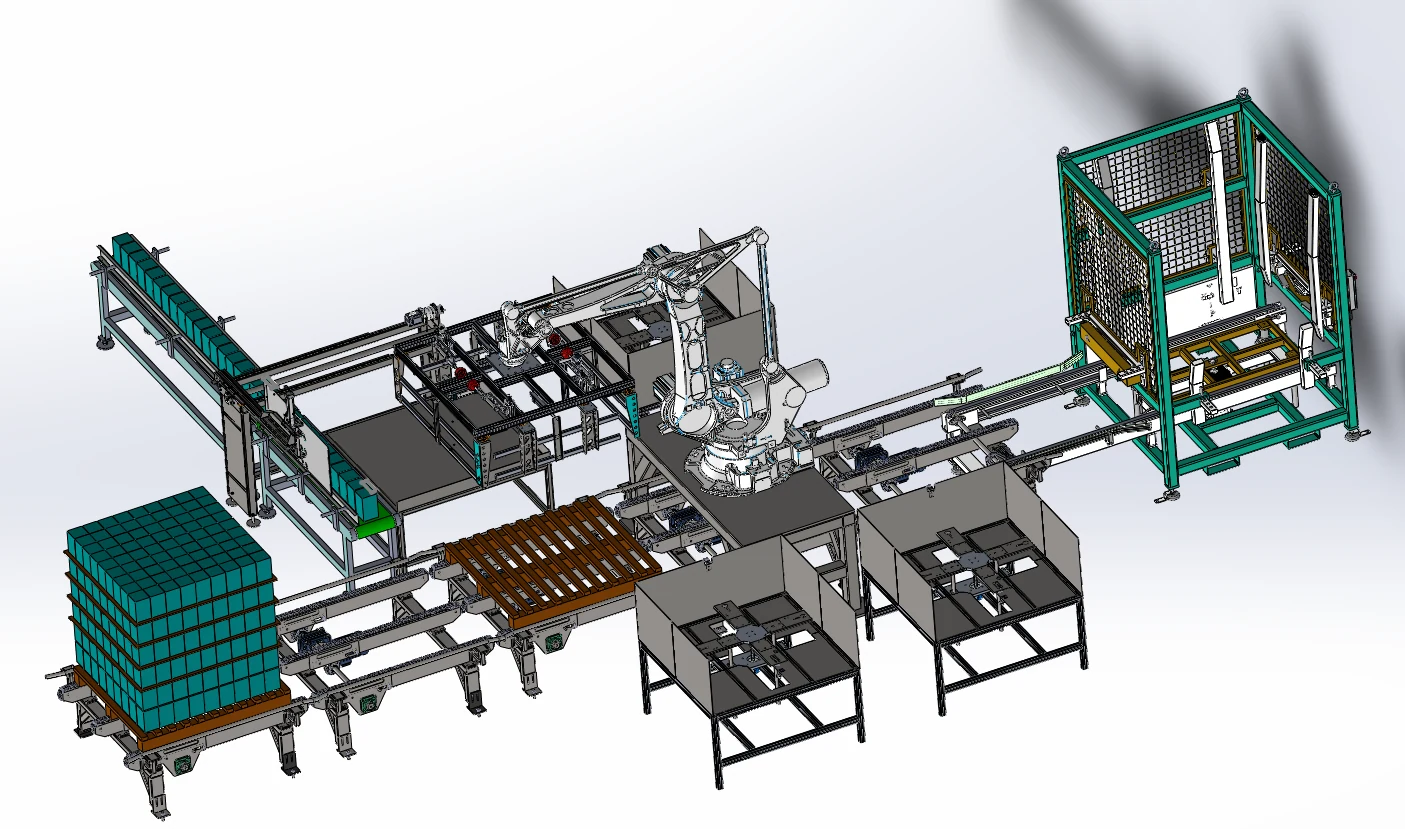
A palletizing robot performs the placement movement, but the surrounding equipment determines how products and pallets reach that movement. A useful cell proposal follows the whole sequence, from incoming product to the transfer of a finished load. Four areas deserve attention before the layout is fixed.
Prepare the product for a repeatable pick
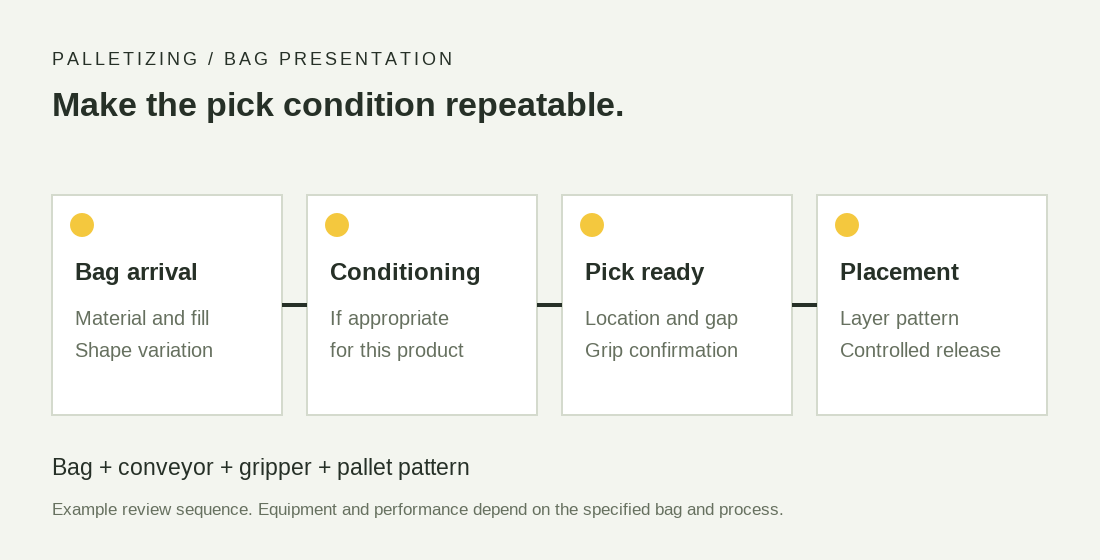
Describe how the product arrives at the pick position: its orientation, spacing, dimensions, weight and surface condition. Cartons may need alignment or grouping. Bags may need shaping and a controlled presentation before the gripping position.
For a grouped pick, define the number of products, how the group is counted and what confirms that the pick is complete. Show the interaction between the incoming conveyor, grouping mechanism and robot. This makes the proposed sequence easier to review than a robot position on its own.
Match the gripper to the handling sequence
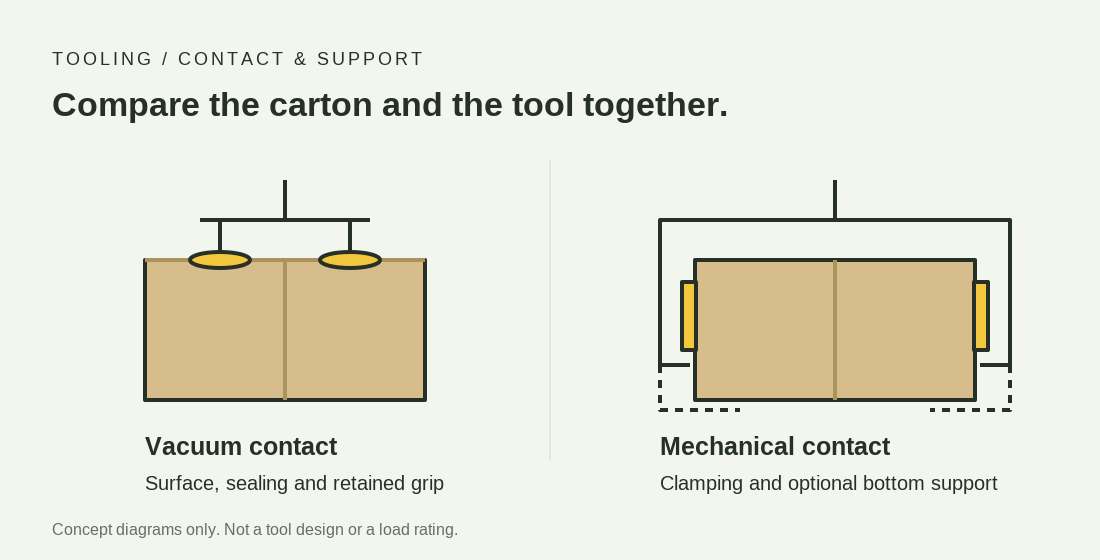
The choice between vacuum, mechanical support or a combined tool depends on the product and the movement. Consider the available gripping surface, product stability, clearance on the pallet and release sequence. The tool's mass belongs in the robot load calculation.
A tool may also handle an empty pallet, a layer sheet or a top sheet. If those functions are combined, describe each operation and the positions it needs. Include the time spent collecting those items when discussing output. A combined tool should be evaluated as a complete mechanism, not simply as a list of functions.
Plan the pallet and sheet supply
Record pallet dimensions, condition and permitted variations. Decide how empty pallets are introduced, located and confirmed ready. A manually loaded pallet position and an automatic pallet dispenser have different operating requirements, so make the selected arrangement explicit.
If the stack uses layer or top sheets, specify their size, material and storage arrangement. Show how the system identifies low material, how replenishment is carried out and how sheet handling fits into the pallet-building sequence.
Include the finished-load handoff
The process continues after the last product is placed. Define whether the finished load leaves by forklift, conveyor or another agreed handling method. Include any wrapping or strapping interface and the way the next empty pallet becomes available.
If there are alternating pallet positions, describe when and how each position changes state. Product flow, operator access and the required protective measures should be reviewed with the full cell layout. The final arrangement needs a project-specific engineering and safety assessment.
Prepare a complete palletizing brief
Provide product samples or drawings, the intended stack patterns, pallet dimensions, finished height and incoming product rate. Add sheet requirements, available floor space and the desired removal method. Distinguish individual products, robot picks and completed pallets when giving output targets.
These details allow the robot, tool, conveyors and supply stations to be considered together. The result is a proposal that explains how the cell operates between picks as well as during them.
Make the equipment boundaries visible
| Stage | Specify | Boundary to agree |
|---|---|---|
| Product arrival | Orientation, counting and pick confirmation | Upstream conveyor and grouping responsibility |
| Empty pallet | Size, condition and located position | Manual loading or automatic dispenser |
| Layer sheet | Material, size and replenishment | Robot tool or separate handling device |
| Finished pallet | Release and next-pallet sequence | Forklift, conveyor, wrapping or strapping interface |
Draw the complete operating sequence beside the layout. Include what happens when a pallet is missing, the sheet magazine is low or the downstream conveyor is unavailable. These states affect whether the cell can continue even when the robot itself is ready.
Separate an individual robot pick from a finished pallet. If a proposal gives actions per hour, confirm whether pallet collection, sheet placement and other actions are included before converting that figure into product output.
Application guidance. Final equipment selection and performance conditions are defined for the individual project.