A filled bag does not behave like a rigid carton. Its shape, contents and centre of gravity can vary, even when the nominal weight stays the same. A bag-palletizing proposal should explain how the bag reaches a repeatable pick position and remains controlled through placement. Robot speed becomes meaningful only when those conditions and the complete operating sequence are defined.
Describe the bag in its production condition
Provide the bag material, filled dimensions, mass range, closure and the characteristics of the contents. Photographs should show how the bag actually leaves the upstream process, including folds, bulging, trapped air or loose material where relevant.
Record the variation within one format as well as the difference between formats. A nominal size does not fully describe the surface and support available to a gripper. The samples used for a trial should represent the range the system is expected to handle.
Give each conveyor stage a purpose
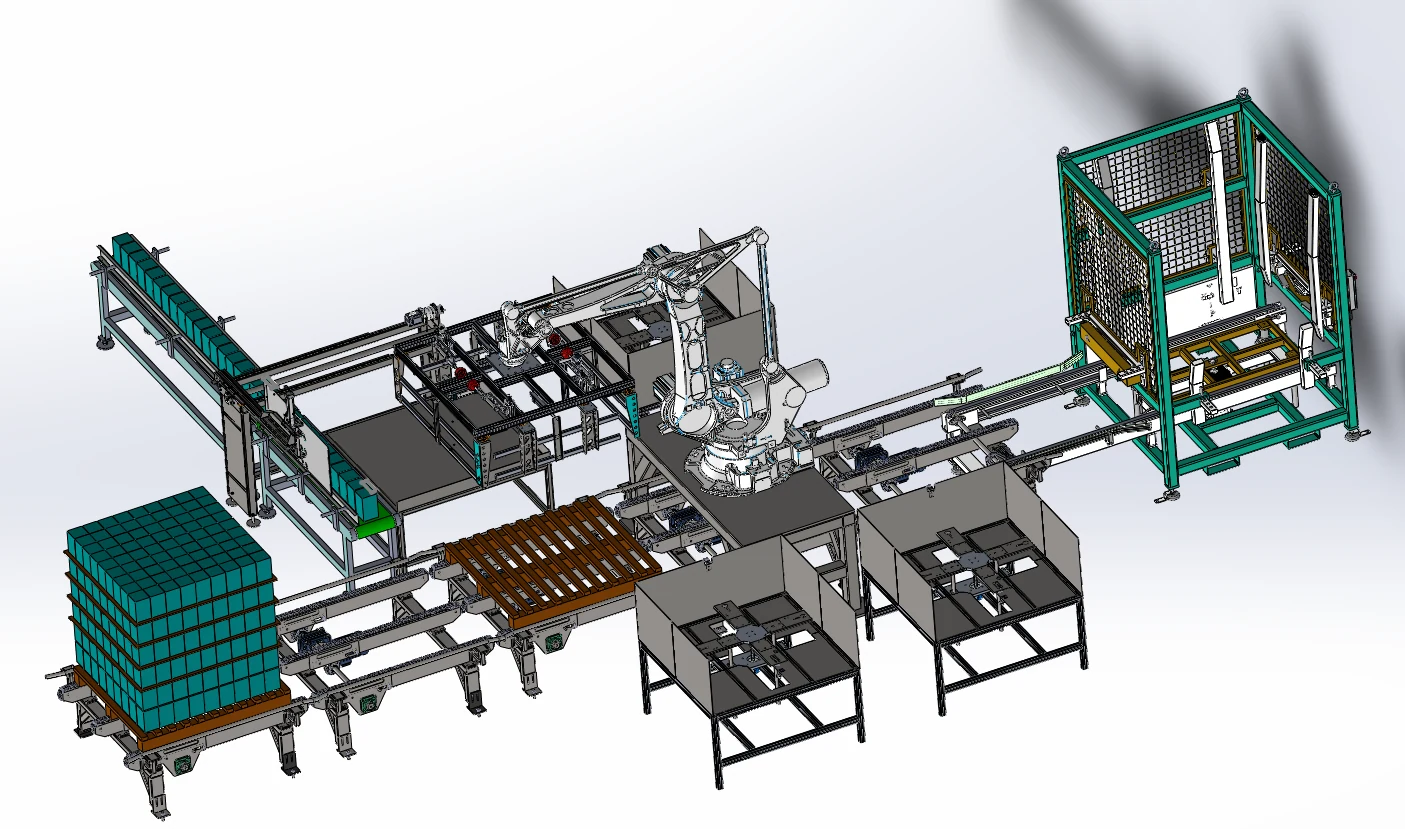
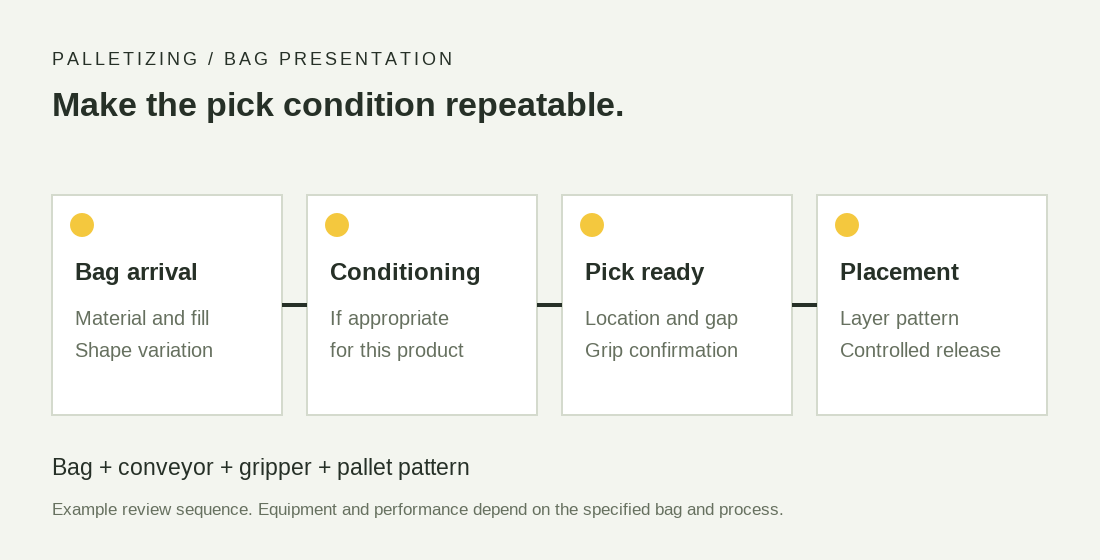
An example bag-handling arrangement may include a decline, a turn, a conditioning section and a pick conveyor. These are design choices rather than a universal equipment list. For each section, explain what condition it receives and what condition the next section needs.
Conditioning may be considered to improve the presentation of a filled bag before picking. Its suitability depends on the bag and contents. Check whether the proposed handling could damage the package, disturb the closure or change the product in an unacceptable way.
Define a repeatable pickup
| Input | Question to resolve |
|---|---|
| Orientation | Which face and seam direction arrive at the pick point? |
| Shape | How much variation remains after any conditioning step? |
| Spacing | How is one bag separated from the next? |
| Location | What locates the bag and confirms it is ready? |
| Exceptions | Where does an unsuitable or uncertain bag go? |
Review the conveyor and gripper as a pair. Support at the pick point, access for the selected gripping mechanism and the confirmation sequence all influence whether the bag can be collected consistently.
Match the tool to the bag and movement
Vacuum, mechanical support or a combined tool may be considered after reviewing the material and contact conditions. Confirm the available surfaces, the risk of slipping or damage, the support during transfer and the way the bag is released onto the stack.
Include the tool in the complete robot load calculation. If the same tool also collects an empty pallet, document that operation separately, including its load distribution, approach positions and confirmation signals. One successful bag lift does not validate every function of a composite tool.
Keep rates, picks and pallets separate
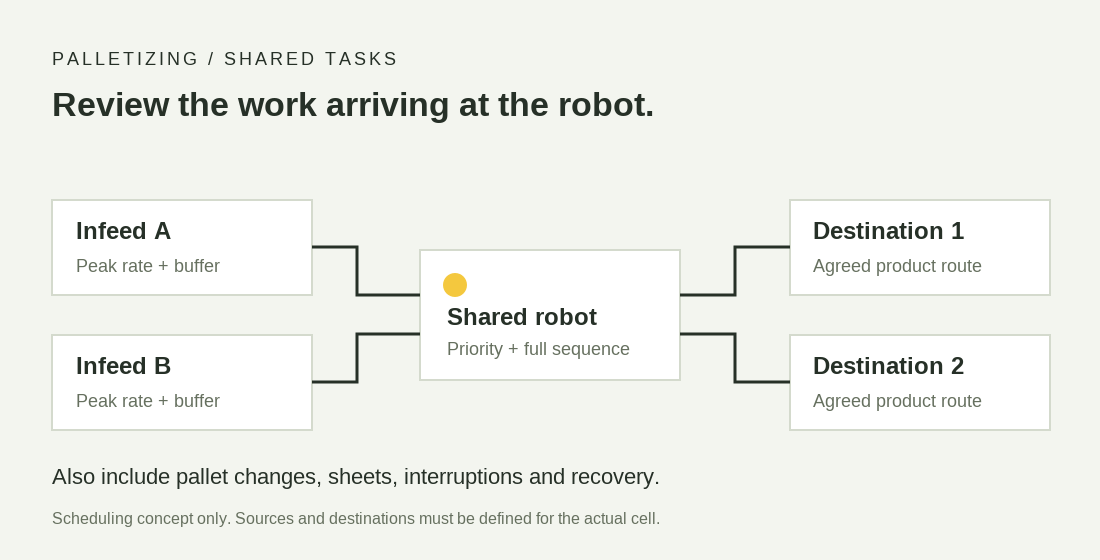
State whether the target is bags per hour, robot picks per hour or completed pallets per hour. A multiple-bag pick changes the relationship between these figures. Pallet collection, sheet handling and position changes can add actions between product picks.
Ask how the sequence handles a late bag, a failed pickup, a full pallet or unavailable downstream equipment. Define how the operator identifies the state and resumes production. These conditions belong in the engineering review alongside the nominal rate.
Bring representative samples to the review
- Bag material, contents, filled dimensions and weight range.
- Samples showing normal production variation and known difficult conditions.
- A video of upstream discharge and the available conveyor layout.
- Target rates, pallet dimensions, layer pattern and finished stack height.
An application review can then identify which presentation and gripping conditions need trials. Any proposed output remains tied to the specified bag, tooling, pattern and operating assumptions.
Application guidance. Final equipment selection and performance conditions are defined for the individual project.