Two robots can look similar on a product page and suit very different tasks. A payload figure and a maximum reach are useful starting points, but an application review needs the product, tooling, movement and operating conditions together. Before comparing models, describe what must move and how it needs to arrive.
Count the complete moving load
The load at the wrist includes the handled product and the equipment attached to the robot. Record the gripper, adapter, sensors and any other attached equipment. For a multiple-product pick, use the combined product weight in that pick.
For illustration, a 20 kg product and an 8 kg tool create a 28 kg moving load before any other attached items are counted. That calculation does not establish that a robot with a 28 kg catalogue rating is suitable. The load distribution and the manufacturer's permitted operating conditions still need review.
Keep the centre of gravity and the gripping position with the mass information. A long or offset tool can change the loading at the wrist. Check the selected manufacturer's load diagrams and allowable torque or inertia data rather than using one model's limits for another.
Describe the movement in space
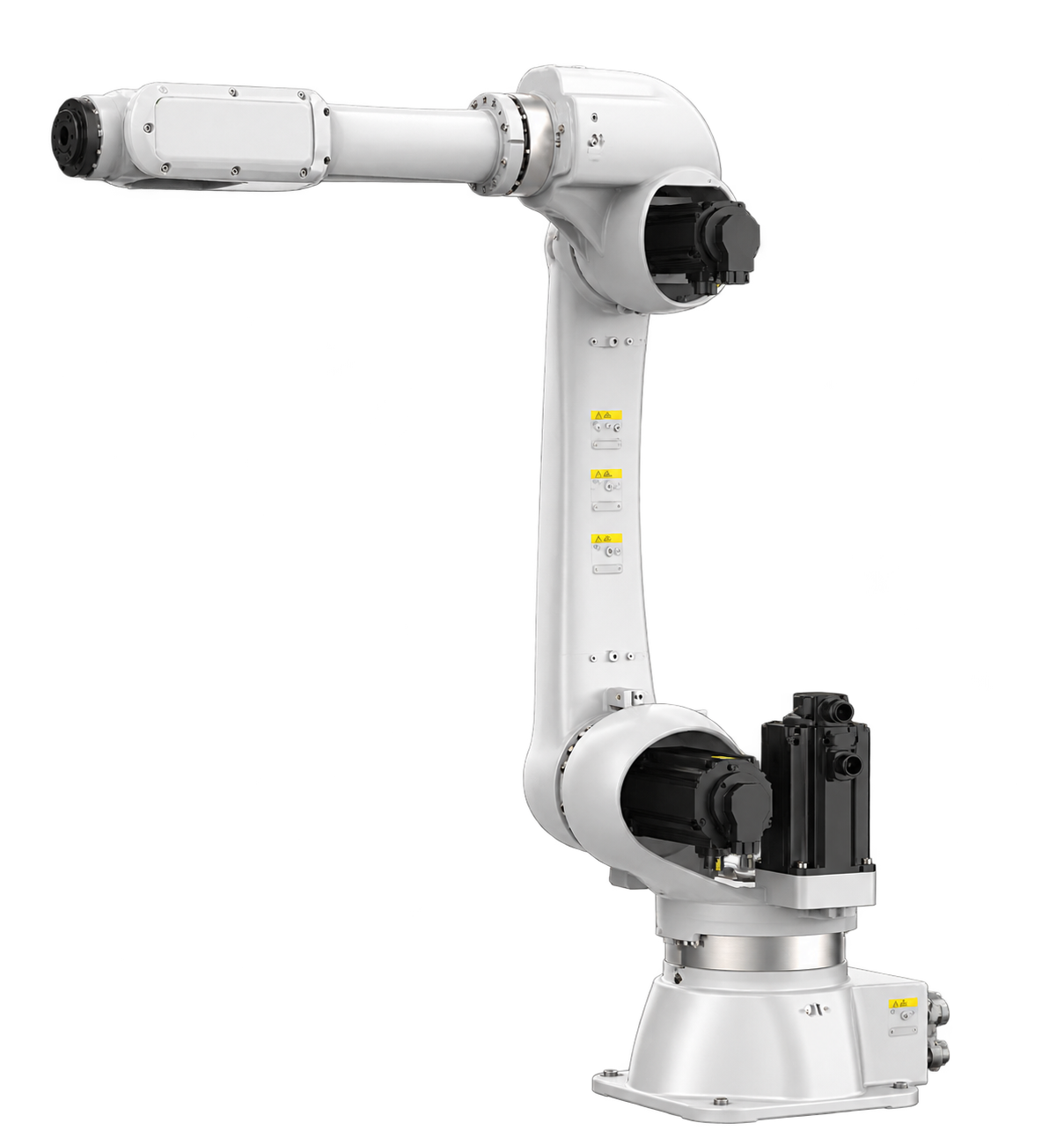
Maximum reach is one dimension of the working envelope. Provide the heights and positions of the pick and place points, product orientation, mounting position and nearby equipment. Include the highest pallet layer or deepest carton position where relevant.
A robot may reach a point without having a useful approach path to it. The tool and product need clearance throughout the movement. Layout review should therefore consider intermediate positions and orientation changes, as well as the two endpoints.
Define the cycle with its surrounding operations
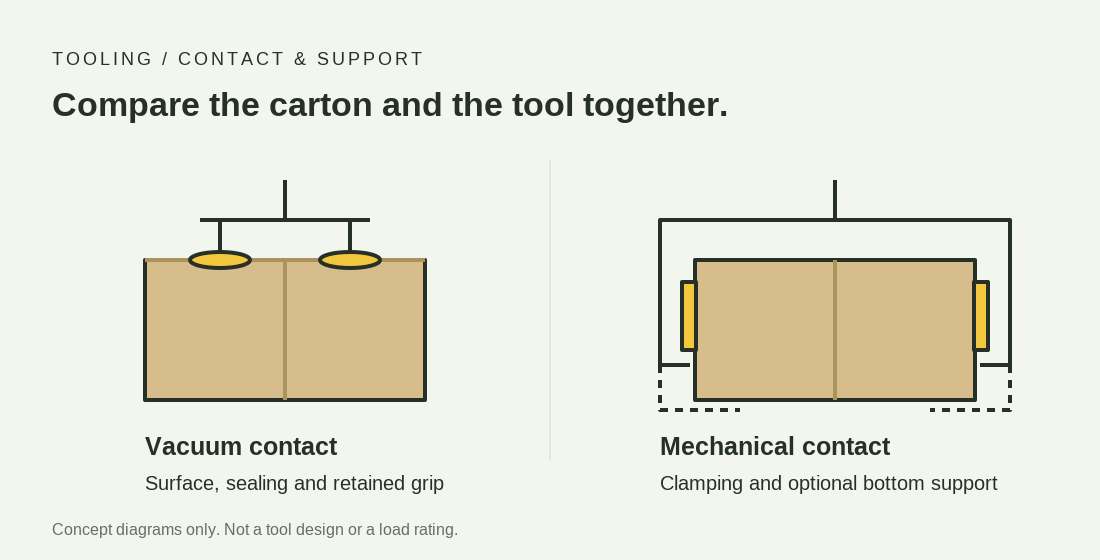
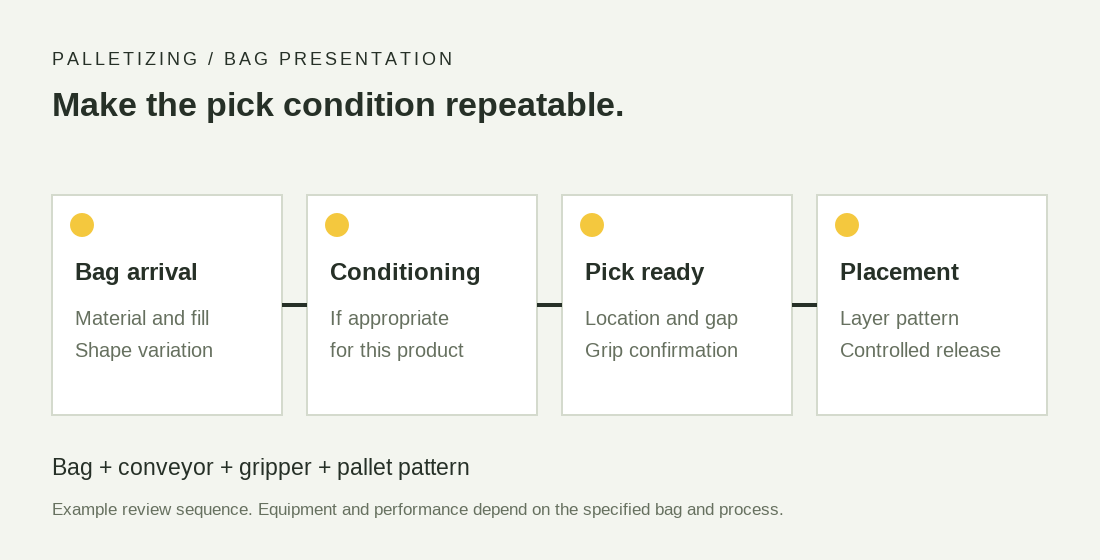
State the required output with units, such as cartons per minute or bags per hour. Then describe how products arrive, how they are detected and how the next station receives them. Gripper opening, vacuum confirmation, positioning and release belong in the cycle discussion.
Separate the movement requirement from activities such as changing pallets, replenishing materials or changing product formats. A cycle estimate should identify what it includes so that the machine supplier and the production team are comparing the same task.
Make a shortlist that can be reviewed
A concise brief helps turn catalogue browsing into an engineering discussion. Bring product drawings or photographs, the expected load range, pick and place positions, target output and installation constraints. Add surface condition, handling restrictions and any existing control interfaces.
- Confirm the complete load and gripping method.
- Review the working envelope with the tool and product in place.
- Check the cycle against the upstream and downstream operations.
- Record open questions before selecting the final model.
Use the catalogue to identify candidates. Confirm the robot, tooling and layout together before treating a candidate as the final selection.
Turn the shortlist into a position-and-load review
| Input | Record | Review question |
|---|---|---|
| Moving load | Products, tool, adapter and attached equipment | Does the selected model permit the complete load and its distribution? |
| Work positions | Pick, place, highest layer and approach positions | Can the tool and product move through the required path? |
| Output | Product rate, products per pick and surrounding actions | What does the quoted cycle include? |
| Formats | Smallest, largest and least stable variants | Which format determines each constraint? |
Use one marked layout to connect these inputs. Label the robot base, conveyor, pallet or carton positions and access routes. A drawing that shows the product at its final position should also account for the tool that carries it there.
An arithmetic load example is only a screening step. Before committing to a model, check its actual load diagram, permitted wrist moments and inertia, mounting conditions and motion requirements with the supplier. Keep unresolved inputs visible in the proposal.
Application guidance. Final equipment selection and performance conditions are defined for the individual project.