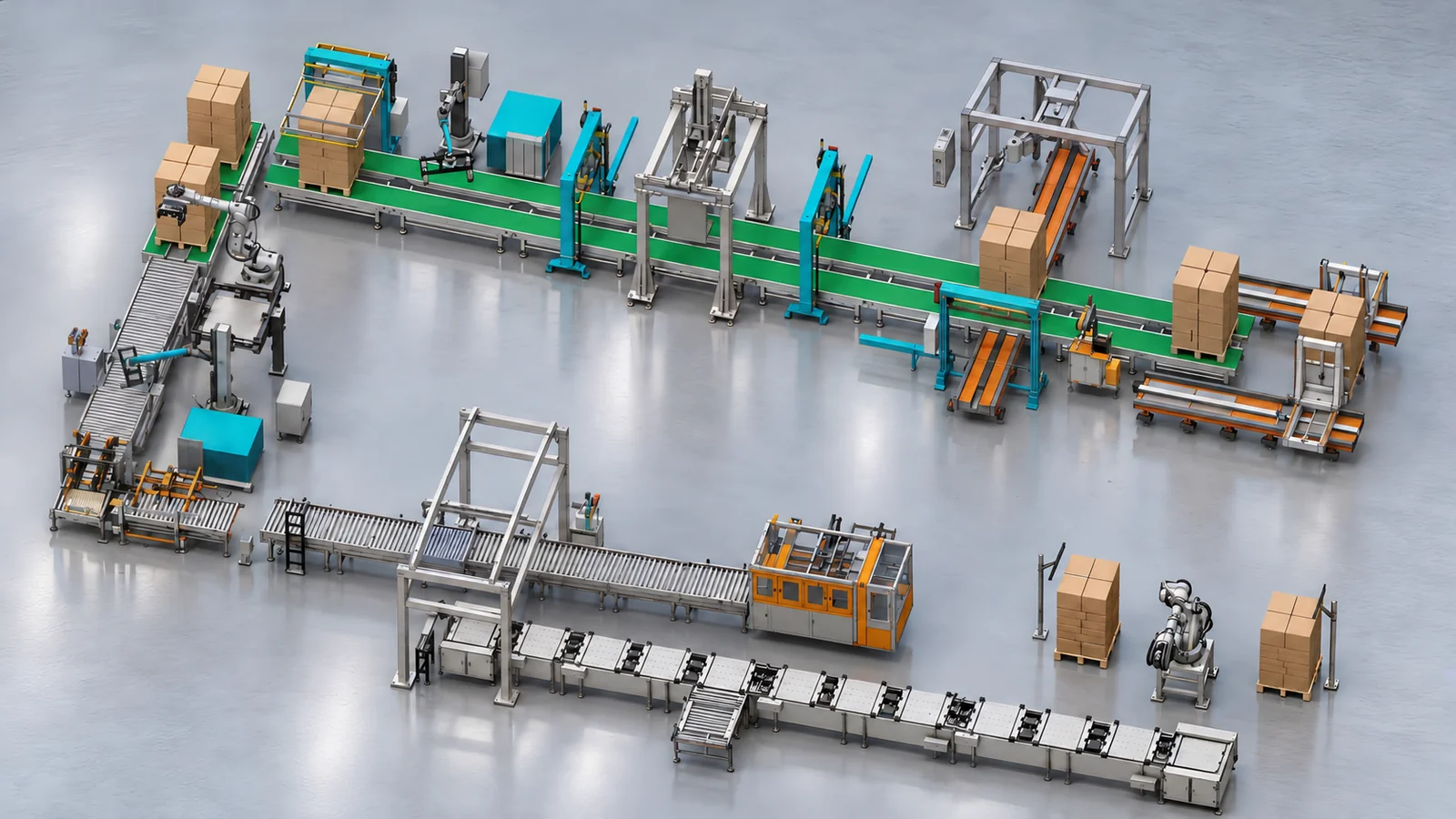
An early automation enquiry does not need a finished engineering specification. It does need a clear description of the task and the conditions that shape it. Organising a few useful inputs helps both teams identify open questions, compare approaches and decide what should happen next.
Describe the product and its packaging
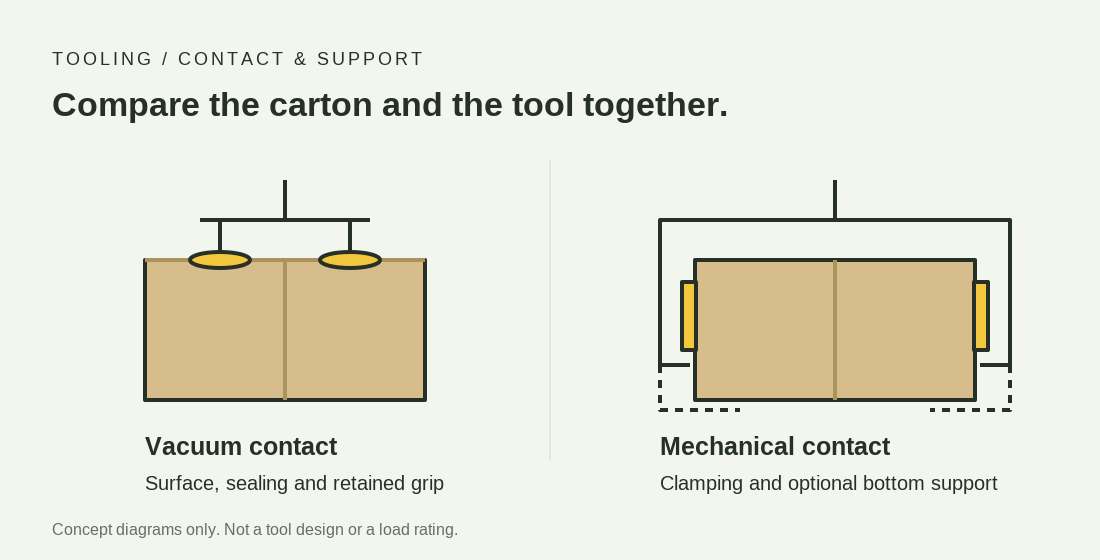
Collect dimensions, weight ranges, photographs and available drawings. Include the different products or package formats that the equipment is expected to handle. Explain what can be touched, gripped, supported or rotated, and identify any surfaces that must remain undamaged.
Packaging details matter as much as the product dimensions. Provide carton styles, inserts, bags, labels, pallet sizes and intended stack patterns where relevant. Mark which formats are essential at launch and which are possible future additions.
Show the current process and the intended result
A process sketch or a short production video can explain the sequence more clearly than a machine list. Identify the manual operations, existing equipment, inspection points and the final packaged state. Describe the problem the project is meant to address.
Separate required outcomes from preferences. For example, a project may require a specified pack format while leaving the equipment arrangement open. Make unresolved decisions visible so that an initial concept does not silently turn an assumption into a requirement.
State output and operating conditions together
Give the output target with units and the product or pack quantity it refers to. Add shift length, planned product changes and the way material is replenished. If a target comes from an existing machine or production report, explain the measurement period and any exclusions.
A requested output is an input to the review, not an automatically confirmed capability. The proposal should explain the conditions, manual work and interfaces that its performance estimate depends on. Identify which figures still require trials or further engineering.
Map the factory and equipment boundaries
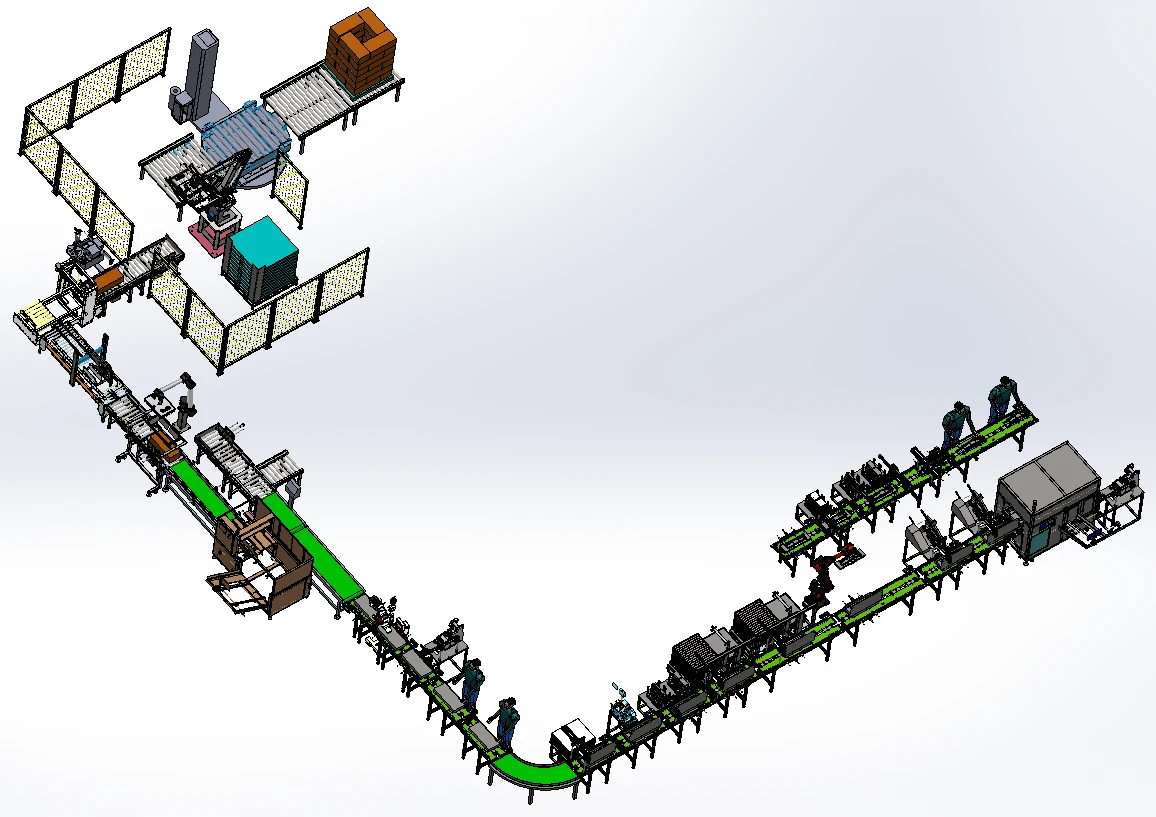
Share available floor space, access routes, nearby columns, ceiling constraints and existing conveyors or machines. Mark material entry and exit points. Include the site utilities and control interfaces that are known, and identify who can confirm the missing information.
List the responsibilities around the equipment: supply of samples, changes to existing machines, installation preparation, unloading and production support. A clear boundary helps avoid a proposal that assumes another party is providing a necessary part of the process.
Use the brief to agree on the next step
Finish with the project stage, desired timing and the decisions that are still open. Ask what can be evaluated from documents, what needs samples and what may need a site review. Budget expectations can be shared as a planning constraint if they are available.
- One product and packaging information sheet.
- A process sketch, photographs or a short video.
- An output target with its units and conditions.
- A layout and a list of existing equipment interfaces.
- A list of open questions and responsible contacts.
This information can support a structured first discussion. The brief can then develop alongside the layout, configuration, trials and agreed project scope.
Use a one-page first-enquiry checklist
- Product: dimensions, weight range, photographs and surfaces that must not be damaged.
- Packaging: cartons, bags, inserts, accessories, pallet size and intended arrangement.
- Process: current steps, existing equipment and the manual work to retain.
- Demand: product formats, target output with units, shift pattern and changeovers.
- Space: a marked layout showing available floor area, entry, exit and nearby obstructions.
- Interfaces: known utilities, equipment signals and identification requirements.
- Open decisions: missing samples, unconfirmed dimensions and the person who can clarify them.
You can start the discussion with incomplete information. Mark estimates and unknowns rather than filling them with assumed values. A photograph with a few dimensions and a short process video can be more useful than a long machine list without a clear production task.
For the first message, prioritise the product, target rate and available space. The engineering review can then identify which samples, drawings and interface details are needed before developing the layout.
Application guidance. Final equipment selection and performance conditions are defined for the individual project.