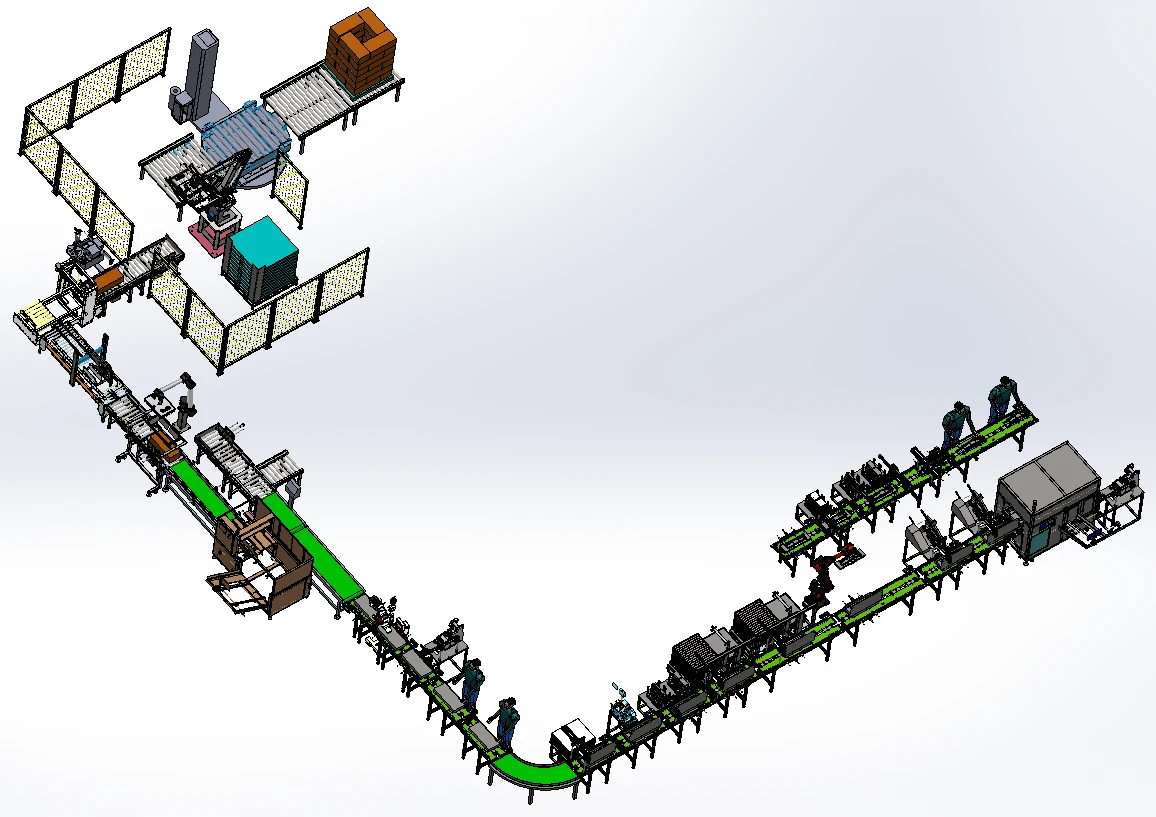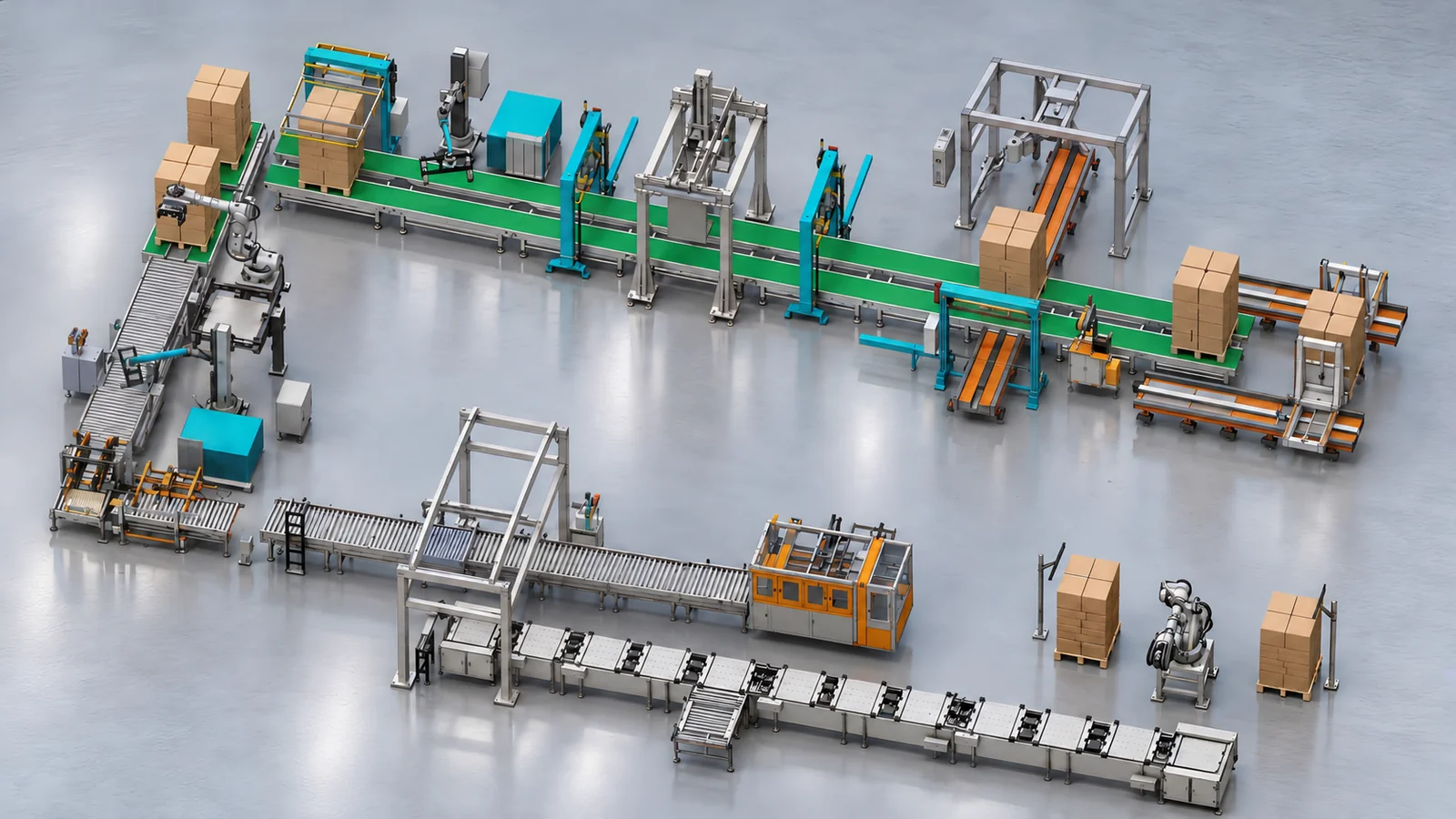
A target such as cartons per minute is useful only when both teams agree on the product, test period and operations it includes. Acceptance planning connects those conditions to the equipment actually supplied. Prepare the test record while developing the proposal so that material supply, manual work, format changes and abnormal conditions can be discussed before the line is ready to run.
Define the equipment and format under test
List the supplied stations, customer equipment and interfaces included in the test. Identify the product, packaging materials, carton arrangement, pallet pattern and relevant control recipe. Record retained manual work and the people or resources needed to perform it.
Separate confirmed formats from formats still requiring trials or further development. A successful run on one product should not automatically close open questions about another. The agreed test plan should identify which checks apply to each format.
Agree on the counting boundary
| Term | Define before testing |
|---|---|
| Products | Individual units entering or leaving the specified process |
| Packs or cartons | Complete packs with the agreed quantity and quality checks |
| Robot picks | Handling actions and the number of products in each |
| Pallets | Completed loads with the agreed pattern, height and sheets |
Record where counting takes place and how rejects, partial packs or repeated actions are treated. Do not convert a figure for robot actions directly into boxes or pallets without the full sequence and counting assumptions.
Distinguish movement rate from sustained output
A short automatic sequence and a longer production run answer different questions. State the test duration, how startup is handled and whether material replenishment, pallet changes, sheet placement and downstream transfer are included.
Record interruptions with their cause and duration. If an upstream or downstream machine is outside the supply scope, agree how its availability affects the test. Keeping these observations with the count makes the result more useful than an isolated maximum-rate figure.
Test format changes and abnormal states
For a format change, define the start and finish: recipe selection, physical adjustments, tooling replacement, material loading and the first acceptable output may all matter. Record the operator actions and the resources used.
Agree which abnormal conditions to review through a project-specific procedure. Examples for discussion include missing material, an uncertain pickup, a full pallet, a rejected item and an unavailable receiving station. Confirm the response, the state shown to the operator and the conditions for restarting. Protective functions and their validation require the appropriate project-specific review.
Verify identification and inspection handoffs
Where barcodes, weighing or vision are included, identify the result to be produced and the equipment that uses it. Check that the result belongs to the correct item at the next station, including any downstream rejection point.
For inspection trials, keep sample classifications and expected decisions with the results. Separate acceptable products rejected from defective products accepted. For data interfaces, agree what must be logged and what happens when the required information or communication is unavailable.
Keep a record that supports follow-up
- Date, location, participants, equipment configuration and recipe.
- Product and packaging identification, sample set and conditions.
- Counts, elapsed time, interruptions and observations.
- Changeover and recovery results with any open actions.
- Responsible contacts, agreed follow-up and supporting records.
Use this checklist as a starting point for the project test plan. Final acceptance criteria, responsibilities and deliverables are agreed for the individual system rather than inferred from a general article.
Application guidance. Final equipment selection and performance conditions are defined for the individual project.