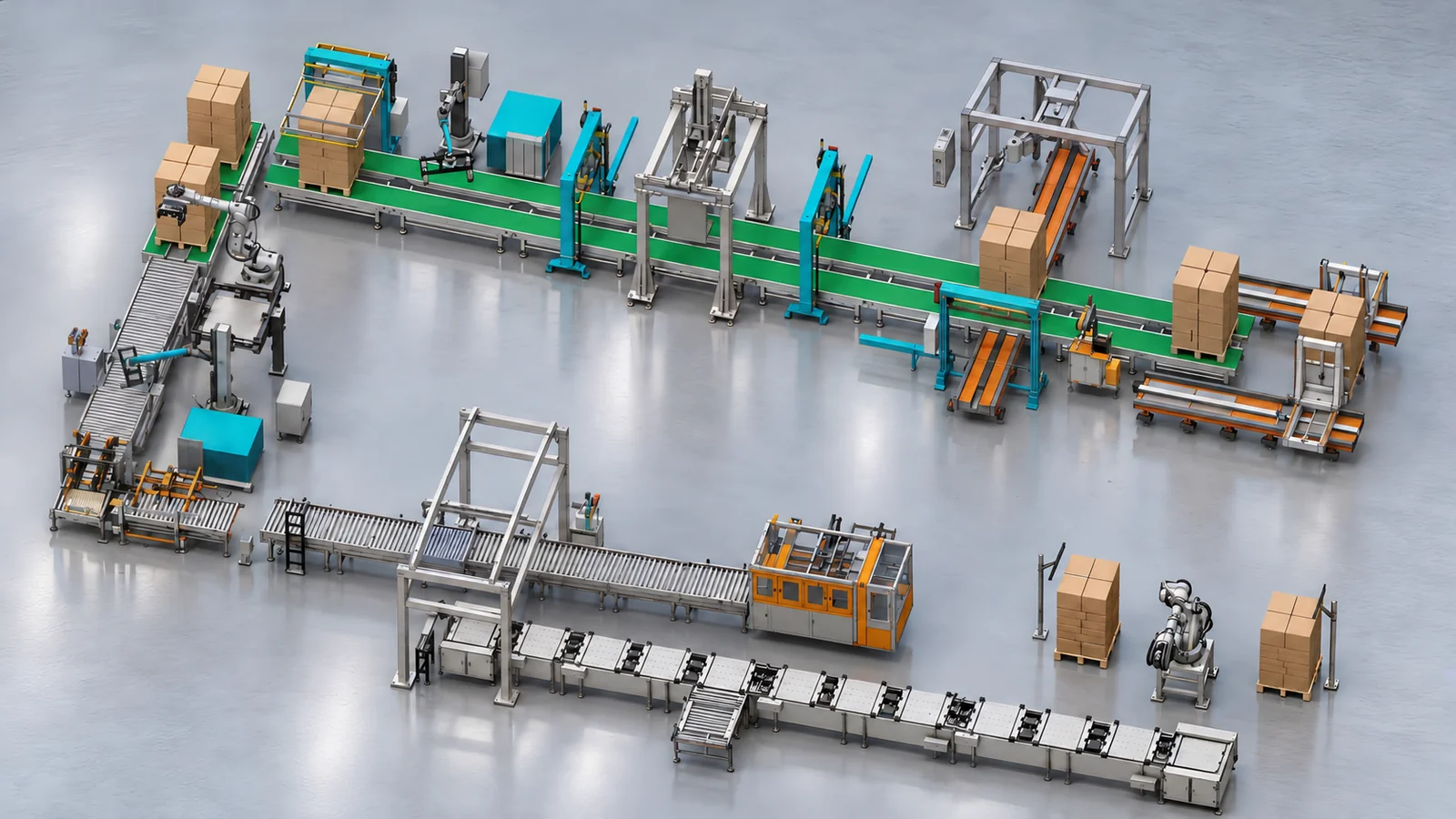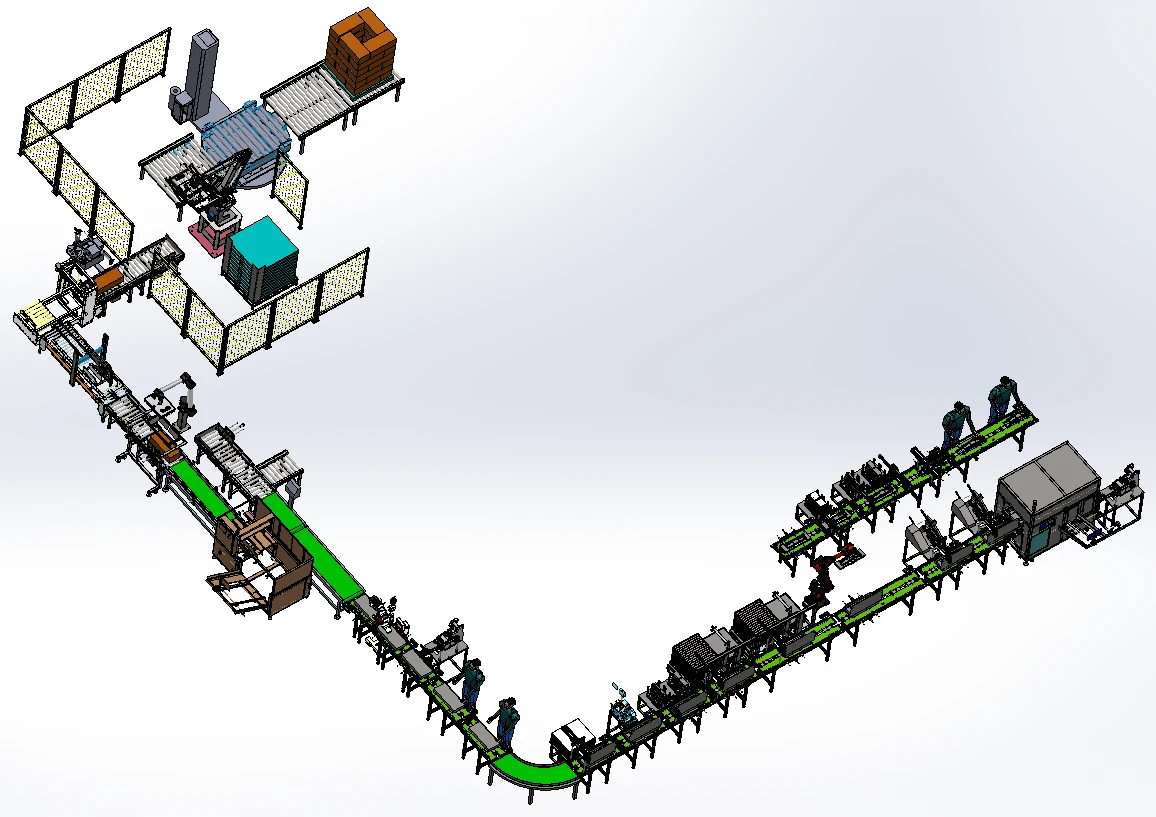
Hardware packaging can involve more than putting a finished part into a carton. A pack may also need a card, a screw bag, instructions and a defined orientation before it moves to case packing and palletizing. A useful line concept follows those items together. The example here explains the engineering choices in a proposed arrangement without treating the concept as a report of commissioned output.
Start with the packaging bill of materials
List the main product and every item that belongs in the finished pack. Include protective parts, cards, accessories, instructions, labels and the carton or presentation box. Record the required quantity and orientation of each item, as well as what changes between product formats.
Use photographs or samples to show the intended finished state. A machine list does not explain whether the screw bag is inserted before or after the product, or which surface must stay visible. Those details determine the sequence and the information needed at each station.
Assign automatic and manual work explicitly
A mixed line can retain manual preparation or accessory insertion where appropriate. Put those activities on the layout with replenishment points and an agreed way to present the completed work to the next station.
For each operation, identify who or what performs it, how completion is confirmed and what happens when material is missing. This keeps retained manual work visible in the output review and avoids describing a partially automated sequence as an unattended process.
Connect feeding, location and checking
| Stage | Engineering question |
|---|---|
| Accessory supply | How are cards, bags and instructions replenished and presented? |
| Product location | What holds the part in the position needed by the next action? |
| Pack completion | What check can confirm the agreed packing requirement? |
| Transfer | Which signal releases the pack to the next station? |
| Exception | Where does an incomplete or uncertain pack go? |
Different checks answer different questions. A weight result should not be assumed to prove that every accessory is present without evaluating the products, variation and acceptance criteria. Select each check around the specific error it needs to detect.
Follow the pack into the downstream line
The proposed sequence can connect carton preparation, case packing, closing, identification, weighing or other agreed checks, palletizing and wrapping. Define how packs are counted and grouped, how the open carton is located and what tells the packing station it is ready.
At each handoff, specify product orientation, release and downstream availability. A stopped sealer or unavailable pallet position should have a defined effect on the upstream stations. Sectioned conveyors and positioning mechanisms are reviewed around those operating conditions.
Write down what changes with the product
A recipe change may alter counts, positions or control parameters. A new part or package can also require a different fixture, guide position, magazine adjustment or tool. Record these physical changes alongside the software selections.
Compare the smallest, largest and most difficult formats rather than assuming one nominal product represents the whole range. Define the first acceptable pack after changeover and the checks needed to resume normal production. Proposed rates remain tied to the specified format and sequence.
Prepare the next engineering review
- Packaging bill of materials with quantities and the finished-pack arrangement.
- Product, accessory and carton samples or drawings.
- Current sequence, retained manual work and required checks.
- Target output, format changes, available space and existing equipment.
These inputs support a concept that explains both the equipment and its handoffs. Specific output, delivery scope and test conditions are then developed for the individual project.
Application guidance. Final equipment selection and performance conditions are defined for the individual project.